📑 Table of Contents
- Introduction
- Quick facts
- What are technical institutes in Pakistan
- Why technical education matters in 2026
- Types of technical institutes in Pakistan
- TEVTA
- PSDF
- IT Boards
- NAVTTC and private centers
- How to apply step by step
- Core programs and top trades
- Program duration and fee comparison
- Course outcomes and expected salaries
- Job pathways and employers who hire
- Internships, apprenticeships and work practice
- Accreditation and certificate value
- How to prepare for admission and interviews
- Best courses after matric for fast jobs
- Best courses for girls and women friendly options
- Online and blended courses option
- Funding, stipends and scholarships
- Tips for freelancing and online income after a course
- Bonus: Growth plan for your first year after course
- Comparison table of institutes
- Frequently asked questions (FAQ)
- Conclusion
- About DailyPostJob.com
Introduction
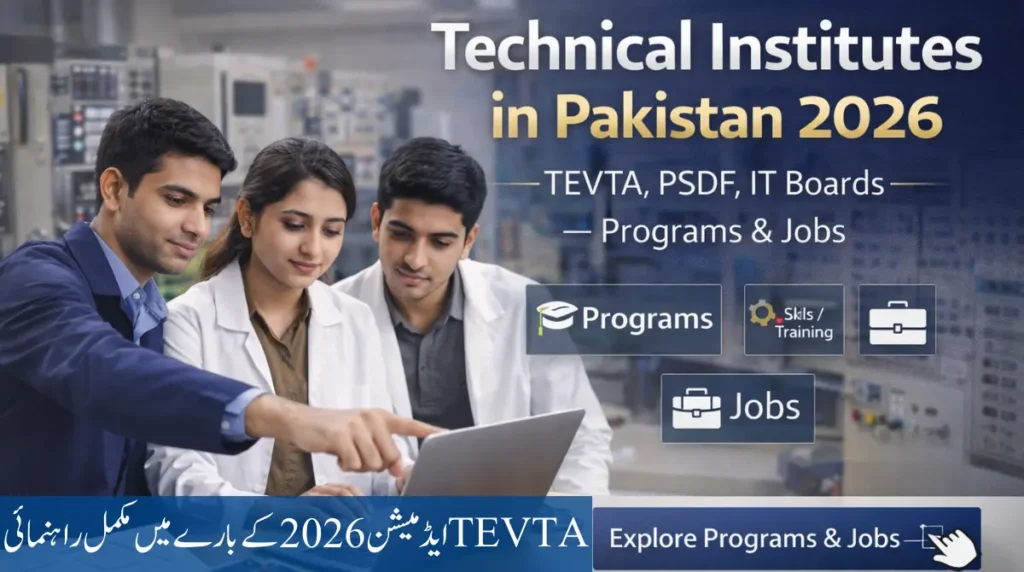
Technical institutes in Pakistan help a student gain job skills fast. These institutes teach practical skills that the market needs. This article will guide you through programs, fees, job results and next steps. Read each section and pick what fits your plan.
Quick facts
- Many courses last 3 months to 3 years.
- PSDF often offers free seats for eligible learners.
- TEVTA offers diploma routes for technical trades.
- IT Boards focus on digital skills and freelancing.
What are technical institutes in Pakistan
Technical institutes teach job skills. They focus on work that employers need. Students learn tools and tasks. The focus stays on hands on work and clear outcomes. Certificates from government bodies carry weight. Private centers give niche skill courses.
Why technical education matters in 2026
Jobs with hands on skills appear faster. Employers hire trained workers who can start on day one. Fees stay low for many technical courses. Short courses let students earn sooner. For many learners technical training gives a path to steady income.
Types of technical institutes in Pakistan
TEVTA
TEVTA works at the provincial level. It runs diploma and trade centers. TEVTA centers teach industrial trades and craft skills.
PSDF
PSDF programs focus on employability. Many seats come free. PSDF adds job links with industry.
IT Boards
IT board courses Pakistan cover web work, design and freelancing. These centers train learners for online jobs.
NAVTTC and private centers
NAVTTC works at the national level. Private centers give shorter niche courses. Verify recognition before you pay.
How to apply step by step
- Pick the course you want.
- Check eligibility on the official site.
- Prepare ID, matric certificate, domicile and photos.
- Register on the portal or visit the center.
- Sit the entry test if required.
- Complete verification and fee payment.
- Start classes on the first day.
Keep copies of all documents. Ask the center for a receipt and course outline.
TEVTA Courses & Admissions (Detailed Guide)
If you want complete details about TEVTA programs, fees, and eligibility, read our full guide on TEVTA Courses in Pakistan 2026.
Core programs and top trades
Top trades that give faster jobs:
- Electrician and wiring
- DAE Mechanical and Electrical
- Auto mechanic and diagnostics
- Mobile phone repair and servicing
- HVAC and refrigeration
- Welding and fabrication
- Computer operator and office skills
- Web development and basic programming
- Graphic design and video editing
- Tailoring and fashion design
Many students move to freelancing after IT board or digital courses.
Program duration and fee comparison
Table: Common program lengths and typical fee ranges
| Program type | Typical duration | Typical fee range (PKR) |
|---|---|---|
| Short course | 3 to 6 months | 2,000 to 10,000 |
| Certificate | 6 to 12 months | 5,000 to 25,000 |
| Diploma (DAE) | 2 to 3 years | 10,000 to 30,000 per year |
| IT bootcamp | 2 to 6 months | Free to 20,000 |
Fees can vary by province and center. PSDF often covers fees for eligible learners.
Table: Admission timeline example
| Institute | Typical application window | Course start |
|---|---|---|
| TEVTA | Twice a year in many centers | After selection |
| PSDF | Rolling and batch based | Monthly or quarterly |
| IT Board | Batch based | Monthly |
Dates change each year. Confirm dates on the institute site.
Course outcomes and expected salaries
Earnings depend on skill, city and job type. Use the table below as a guide.
| Job role | Entry salary (PKR) | 1 year experience |
|---|---|---|
| Electrician | 20,000 to 35,000 | 30,000 to 50,000 |
| Mobile repair tech | 15,000 to 30,000 | 25,000 to 45,000 |
| Computer operator | 18,000 to 30,000 | 25,000 to 45,000 |
| Welder | 18,000 to 32,000 | 28,000 to 45,000 |
| Freelance web designer | 0 to 30,000 | 30,000 to 80,000+ |
| HVAC technician | 25,000 to 45,000 | 40,000 to 75,000 |
Freelance earnings vary. A skilled freelancer can earn more than a salaried worker.
Job pathways and employers who hire
- Small and medium workshops
- Construction companies
- Factories and plants
- Telecom outlets
- IT firms and startups
- Export houses and garment factories
- Online clients and freelance marketplaces
Large firms prefer certified candidates. Government projects hire via tenders and contractor lists. Keep a record of practical work done during your course. Work samples matter.
Internships, apprenticeships and work practice
Apprenticeship gives real work exposure. Many centers partner with local firms. Ask the training manager about links to local employers. Short internships help build a CV. Work practice often turns into a job offer.
Accreditation and certificate value
Check the certificate body. TEVTA, NAVTTC and PSDF certificates carry official value. Private certificates help for freelancing and small jobs. For overseas work, ask the employer which certificate they accept.
How to prepare for admission and interviews
- Bring original documents and copies.
- Prepare a short CV.
- Learn common trade tools and terms.
- Show sample work or photos.
- Dress simple and neat for interviews.
- Ask about course hours and job support.
Simple answers work best. Keep proof of prior work if you have any.
Best courses after matric for fast jobs
- Mobile phone repair and network servicing
- Computer operator and basic IT support
- Auto mechanic trade
- Tailoring and garment production
- Electrician and wiring
Short courses in these trades give faster hiring chances.
Best courses for girls and women friendly options
- Tailoring and fashion design
- Beautician and salon skills
- Graphic design and UI basics
- Digital marketing and social media
- Data entry and office skills
Many centers offer ladies only batches. PSDF gives seats for women and offers stipends in many programs. These courses help women start home based work or small businesses.
Online and blended courses option
Some institutes now give blended learning. Students attend online classes and do hands on work in local labs. Online learning works for basic IT and design courses. For heavy trades you must join a workshop for practice.
Funding, stipends and scholarships
- PSDF gives full fee support for qualified learners.
- Some centers give monthly stipends during training.
- NGO partners can give tool kits after course end.
- Check job fairs for stipend based internships.
Always ask the center about any support before enrolment.
Tips for freelancing and online income after a course
- Build a sample portfolio with real projects.
- Start with small tasks on freelance sites.
- Ask local businesses for small paid work.
- Use social media to show your work.
- Learn client communication and quote fair prices.
Freelancing needs patience at first. Small wins build trust and higher pay.
Bonus: Growth plan for your first year after course
Month 1: Finish course and get certificate.
Month 2: Do three paid projects or an apprenticeship.
Month 3 to 6: Build a small portfolio and apply to jobs.
Month 7 to 12: Start a small service or expand freelance clients.
Track income and reinvest in tools and a short advanced course.
This plan helps a new graduate move from training to steady income.
Comparison table of institutes
| Institute | Best for | Fee level | Job support |
|---|---|---|---|
| TEVTA | Technical diplomas | Low | Moderate |
| PSDF | Short free courses | Free for eligible | High |
| IT Boards | Digital and IT skills | Low to free | Moderate |
| Private centers | Niche quick skills | Medium | Low to moderate |
Frequently asked questions
Q1: Are TEVTA qualifications valid for government jobs
Yes. TEVTA diplomas carry value for technical posts. For specific posts check job adverts.
Q2: Can I do PSDF courses if I live outside Punjab
PSDF focuses on Punjab. Other provinces have similar programs. Check provincial portals.
Q3: Do technical courses give certificates recognized abroad
Recognition depends on the country and the employer. Some Gulf jobs accept TEVTA or NAVTTC certificates.
Q4: How long before I get a job after a short course
Many students get small jobs in 1 to 3 months. For better pay it may take longer.
Q5: Does PSDF provide tool kits after course
Some PSDF partners give tool kits. Ask before enrollment.
Conclusion
Technical training gives clear career paths. Students gain skills fast. They pay less and start earning sooner. TEVTA, PSDF and IT Boards offer many good options. Choose a course that matches job demand in your area. Check institute recognition and job links before you enroll.
About DailyPostJob.com
DailyPostJob.com helps students and job seekers in Pakistan. We publish admission alerts, free PDF notes, and step by step guides. Share this article with friends and classmates. Join our WhatsApp and Telegram lists for fast updates and free study materials. Download our free PDF notes on top technical courses to plan your next step.
Explore Our More Latest Articles:
PPSC MCQs Preparation 2026 – Free Practice Questions for Written Test
Hijazi
PPSC Past Papers PDF 2026 Free Download | DailyPostJob
Hijazi
PPSC Interview Preparation 2026 – Complete Guide to Pass Your Interview
Hijazi
PPSC Result 2026 – Check Merit List, Written Test & Final Selection
Hijazi
PPSC Test Schedule 2026 – Written Exam Dates & Timings
Hijazi